Inducted in 2021
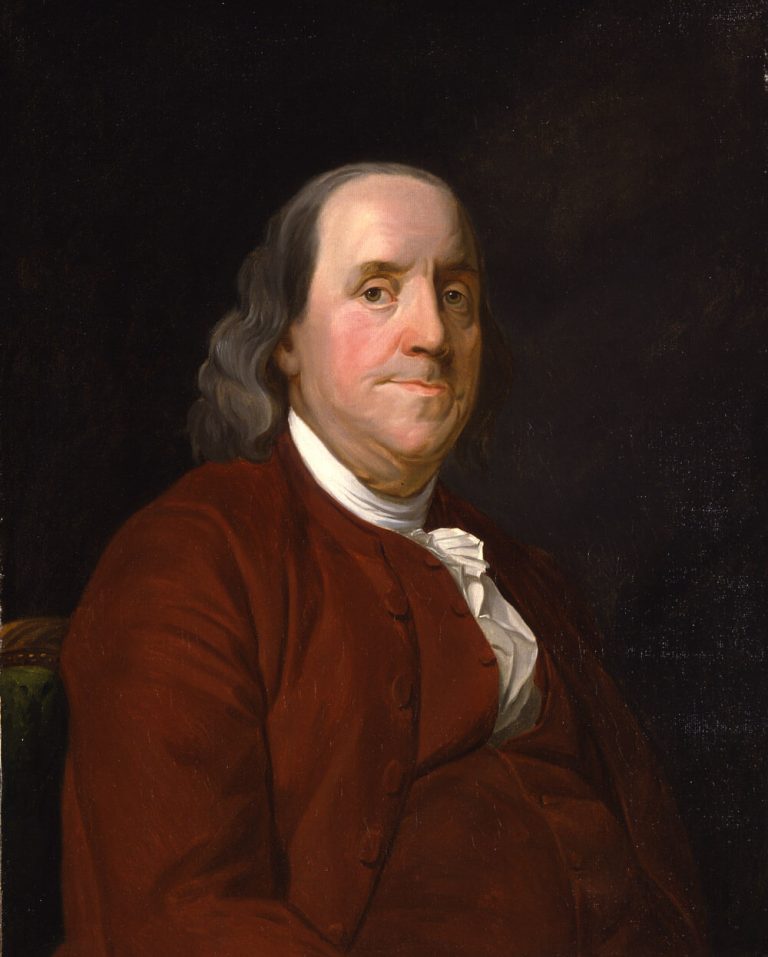

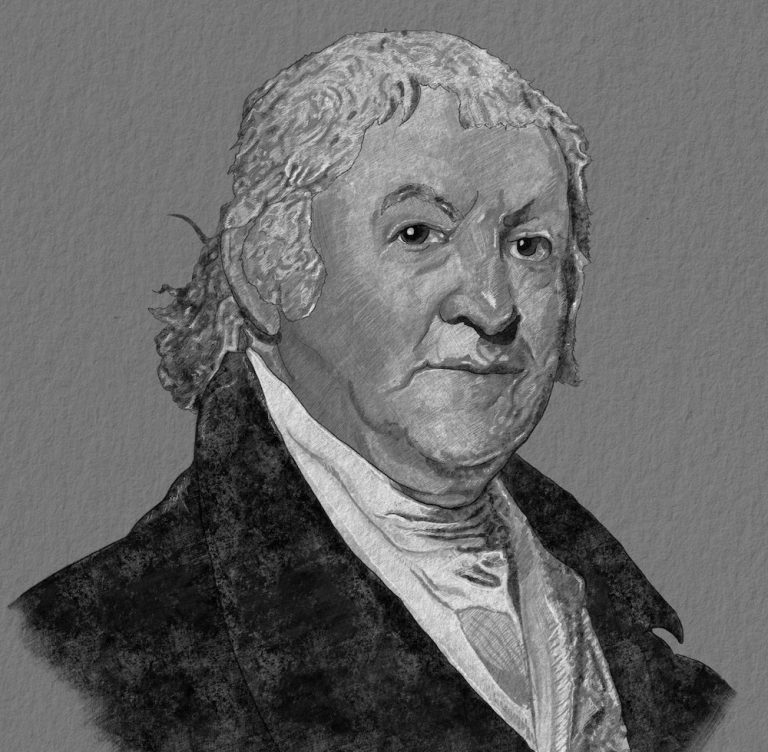
Boston-born Benjamin Franklin (1706–1790) established what became a successful printing business in Philadelphia as a young man. From an early age, Franklin developed and followed a philosophy of continual self-improvement. He also practiced this ideal in his community, helping found and improve organizations that contributed to individual and public good, including Freemasonry.
Thinker and Diplomat
After he retired from business in his early 40s, Franklin turned his curiosity to his vast interests, including politics, science, philosophy, literature, and diplomacy. In Paris in the late 1770s, he successfully sought French support for the American fight for independence. He later served as ambassador to France for the new United States. Upon his return to Pennsylvania as a respected elder statesman, he became President of the Pennsylvania Assembly, helped shape the new nation at the Constitutional Convention, and worked to abolish slavery.
A Freemason for the Ages
Franklin became a Freemason as a young man, in 1731. Able and active, he served as Grand Master of Pennsylvania just three years later and as Provincial Grand Master of Pennsylvania in 1749. Alongside his many endeavors, Franklin held many lodge and Grand Lodge offices. Near the end of his life, his Pennsylvania brethren honored Franklin as “An illustrious Brother” of “distinguished merit” entitled to the “highest veneration.”
Photo Above:
Benjamin Franklin, ca. 1782. Joseph Wright (1756–1793), Paris, France. Special Acquisitions Fund, 92.025.
33 Marrett Road
Lexington, MA 02421
Monday through Friday from
9:00am to 4:00pm.
Open Certain Saturdays
9:00am to 4:00pm

Learn more about the others who have been inducted into the Masonic Hall of Fame.